

The NFA Just Took a Direct Hit — But Montana Gun Owners Need to Pay Attention
The NFA Just Took a Direct Hit — But Montana Gun Owners Need to Pay Attention
For more than 90 years, Americans wanting to purchase a suppressor have dealt with one of the most burdensome pieces of federal firearms regulation in the country: the National Firearms Act of 1934.
Federal registration. ATF paperwork. Photographs and fingerprints associated with the traditional NFA process. Waiting for government approval. And, historically, a $200 tax tied to making or transferring an NFA firearm.
Now, the legal foundation supporting a major portion of that system has taken a serious hit.
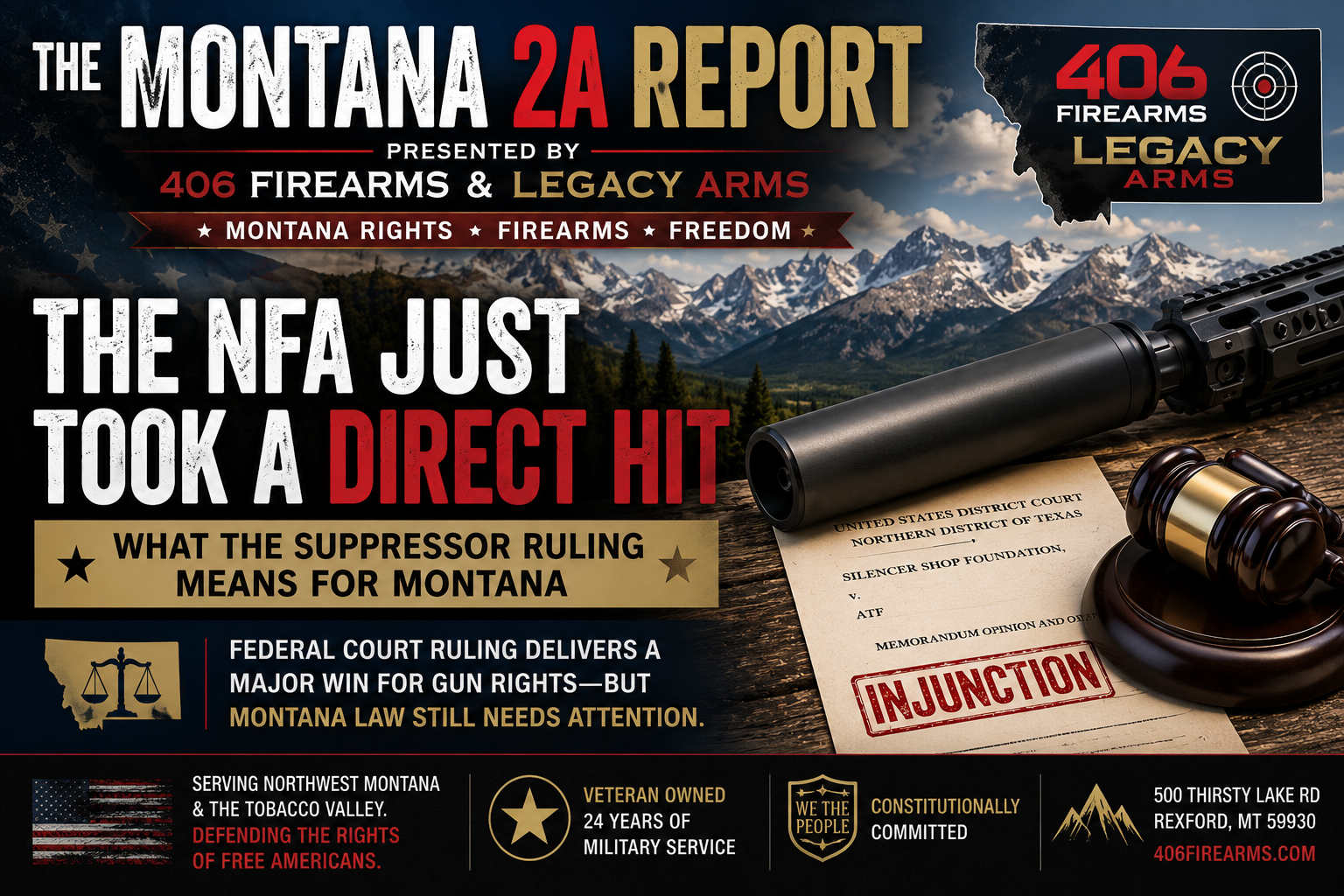
On August 5, 2026, U.S. District Judge James Wesley Hendrix of the Northern District of Texas ruled in Silencer Shop Foundation v. ATF, consolidated with Jensen v. ATF, that challenged portions of the NFA exceeded Congress’s constitutional authority as applied to untaxed firearms.
The court issued a permanent injunction preventing federal officials from enforcing the challenged provisions against the plaintiffs and, where applicable, their current and future members and customers.
For supporters of gun rights, this is a major development.
For Montana gun owners, however, there is another chapter to the story—and it deserves our attention.
How We Got Here
The National Firearms Act has historically operated through Congress’s taxing power.
The federal government didn’t simply prohibit suppressors. Congress imposed taxes on making and transferring covered firearms and surrounded those taxes with registration and regulatory requirements.
That relationship between taxation and registration became extremely important when Congress reduced the NFA making and transfer taxes on most covered firearms to $0 beginning in 2026.
The tax disappeared.
Much of the regulatory system remained.
That produced a fundamental constitutional question:
If the registration system was enacted to support the collection of a federal tax, what constitutional authority supports that system after Congress reduces the tax to zero?
Judge Hendrix concluded that, for the challenged provisions and untaxed firearms before the court, the answer was that the government could no longer rely upon Congress’s taxing power.
Importantly, the court did not decide the plaintiffs’ Second Amendment claims. It concluded that the plaintiffs were entitled to relief based upon Congress’s Article I enumerated powers and therefore found it unnecessary to reach the Second Amendment question.
That distinction matters when discussing exactly what the case decided.
What Happened After the Ruling
The court stayed its order for seven days to give the federal government an opportunity to seek appellate relief.
That period expired, and the injunction became effective.
Suppressor transactions covered by the injunction have subsequently begun proceeding without the traditional NFA registration process.
After more than nine decades of federal NFA regulation, that is an extraordinary development.
But there is an extremely important qualification.
The NFA has not simply disappeared nationwide.
The injunction applies to the plaintiffs and, where applicable, their members and customers—both current and future.
It is therefore misleading to reduce the decision to a social-media headline claiming:
“The NFA is gone.”
It isn’t.
The decision is nevertheless one of the most consequential challenges to the NFA’s regulatory structure in generations.
And the litigation surrounding that structure is far from finished.
Suppressors Are Practical Equipment
Suppressors have spent decades being portrayed in movies and political rhetoric as sinister devices capable of making firearms virtually silent.
Anyone who has actually used one knows better.
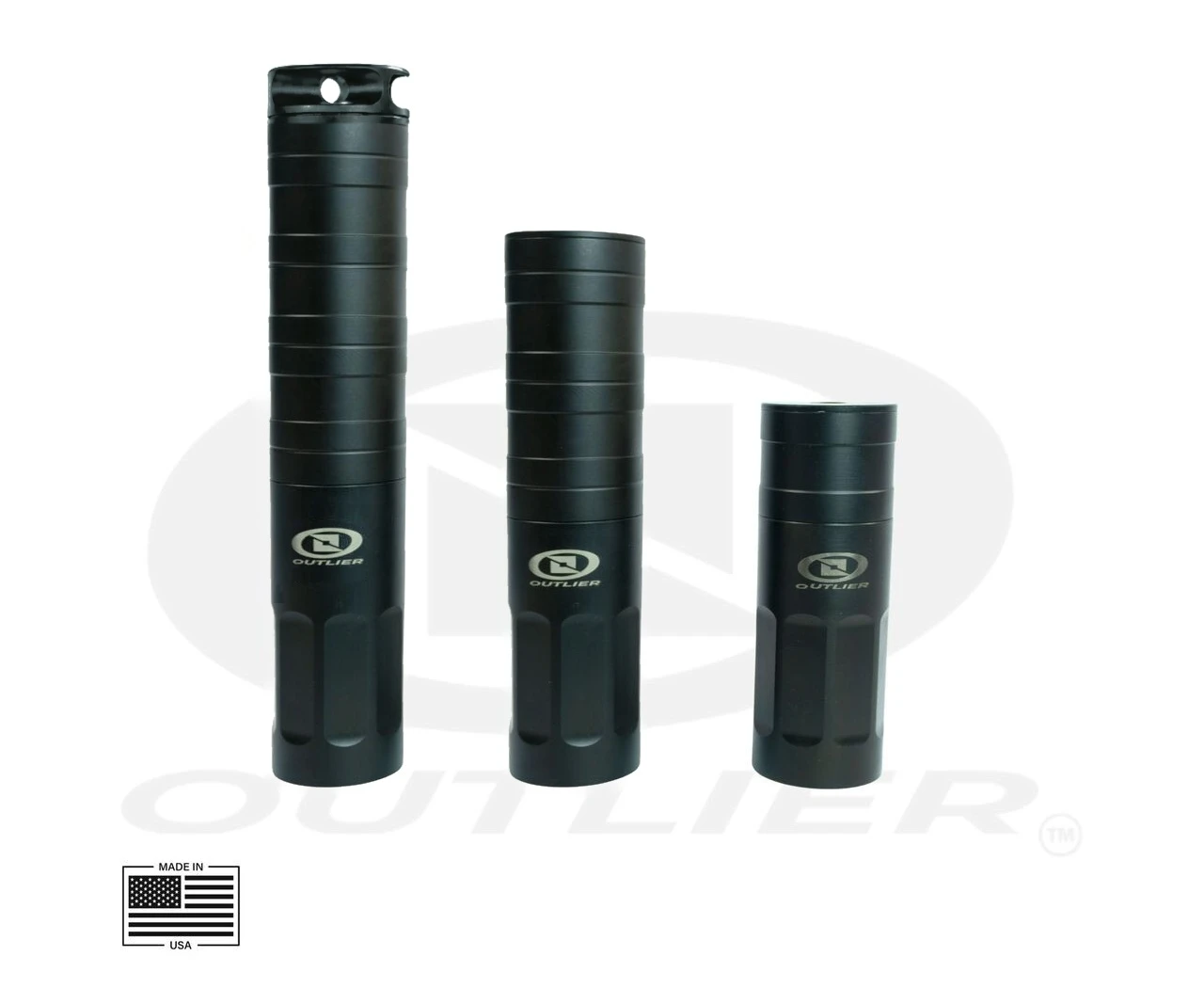
Suppressors reduce muzzle blast. They do not magically transform a firearm into the nearly silent Hollywood version portrayed on television.
For hunters and recreational shooters—particularly here in Montana—that has practical value.
Suppressors can reduce noise around shooting areas and provide an additional layer of protection against hearing damage. They can also be useful while hunting, conducting predator control, shooting around livestock, training new shooters, or simply spending time at the range.
Perhaps the question shouldn’t be:
“Why should ordinary Americans be allowed to own suppressors?”
Perhaps we should be asking:
“Why has hearing-protection equipment been subjected to an extraordinary federal tax-and-registration system since 1934?”
Then There Is Montana
This is where the story becomes particularly important for those of us in Big Sky Country.
Montana has a strong firearms tradition and substantial protections for lawful firearm ownership.
But Montana also has an older statute that suddenly deserves much more attention.
Montana Code Annotated § 45-8-337
Montana law addresses possession of a silencer that is not registered under federal law and provides that such possession may constitute prima facie evidence of an unlawful purpose.
For decades, the practical conflict was limited because lawfully transferred suppressors generally went through federal NFA registration.
Now consider what happens when a suppressor is lawfully transferred under the protection of a federal injunction without traditional NFA registration.
Federal litigation and existing Montana statutory language are suddenly intersecting in a way that deserves immediate attention.
Montana’s Legislature Needs to Address the Issue
This problem wasn’t completely unexpected.
The Montana Shooting Sports Association previously identified the potential conflict involving MCA § 45-8-337 and announced its intention to pursue legislation during the 2027 Montana Legislature to repeal the provision.
Recent federal developments make that issue even more significant.
Montana should not maintain outdated statutory language that creates potential legal uncertainty around possession of an otherwise-lawful suppressor simply because that suppressor isn’t federally registered.
If federal registration requirements continue falling in court, Montana law needs to keep pace.
Repealing or appropriately revising § 45-8-337 should therefore be on the radar of Montana gun owners and legislators heading into the 2027 session.
This Fight Is Bigger Than Suppressors
There is a broader constitutional principle at work here.
The federal government possesses powers granted to it by the Constitution.
When Congress establishes a regulatory system based upon one of those enumerated powers, courts are entitled to examine whether the constitutional justification supporting that system still exists.
That’s what makes Silencer Shop Foundation v. ATF important.
This wasn’t merely an argument about whether suppressors are useful or whether somebody should be allowed to own one.
It asked a more fundamental question:
Where does the federal government’s constitutional authority come from?
The court concluded that Congress’s taxing power could no longer support the challenged NFA provisions for the untaxed firearms at issue after Congress eliminated the associated taxes.
Whatever happens next, that is an important constitutional development.
What Montana Gun Owners Should Do Right Now
Celebrate a significant victory for limited government and firearm rights.
Follow the litigation.
Pay attention to efforts to address MCA § 45-8-337 during Montana’s 2027 legislative session.
But don’t assume that every NFA requirement has vanished or that every suppressor transaction in America is now automatically covered.
The federal injunction has defined beneficiaries, and Montana presents an additional state-law consideration.
There is a difference between vigorously exercising constitutional rights and unnecessarily becoming the person who has to finance the next test case.
Know which laws and court orders apply to your particular circumstances.
The Bottom Line
August 2026 could eventually be remembered as a turning point in the history of federal suppressor regulation.
Congress eliminated the relevant tax.
A federal court examined the regulatory system that remained and concluded that the challenged NFA provisions could no longer be justified against the covered parties through the constitutional authority upon which they had rested.
Now the legal fight moves forward.
Here in Montana, we also have some housekeeping to do.
Montana’s § 45-8-337 deserves serious attention when the Legislature returns in 2027.
Our constitutional rights don’t stop at the Montana state line—and Montana law shouldn’t unnecessarily create uncertainty when federal courts begin imposing limits on federal firearms regulation.
THE MONTANA 2A REPORT
Presented by 406 Firearms & Legacy Arms
Serving Northwest Montana & the Tobacco Valley. Defending the Rights of Free Americans.
Veteran Owned • 24 Years of Military Service • Constitutionally Committed
500 Thirsty Lake Rd • Rexford, MT 59930
The Montana 2A Report provides commentary and general information concerning firearms, legislation, regulation, and litigation. It is not legal advice. Firearm owners and businesses should verify current federal, state, and local requirements before acting on information involving regulated firearms.
SOURCES
- U.S. District Court for the Northern District of Texas — Silencer Shop Foundation v. ATF, Memorandum Opinion and Order, August 5, 2026.
- Associated Press — Coverage of the federal injunction taking effect August 13, 2026.
- Montana Code Annotated § 45-8-337.
- Montana Shooting Sports Association — “Suppressor Update — Congress and Montana.”
- Silencer Shop Foundation — Current information concerning Silencer Shop Foundation v. ATF.